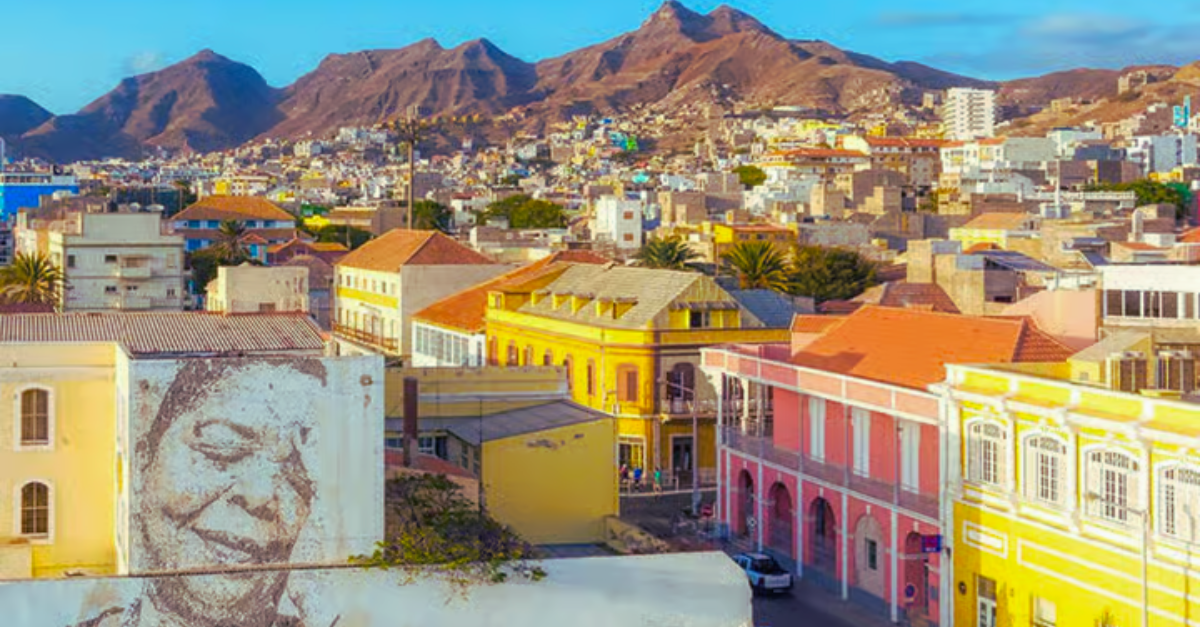
For much of its modern history, Cabo Verde was a footnote on the global travel map, a volcanic archipelago off the West African coast known primarily to European holidaymakers and largely overlooked by the rest of the world.
That changed on October 13, 2025, when the Blue Sharks, Cabo Verde’s national football team, qualified for the 2026 FIFA World Cup, making the country the smallest nation by population ever to reach the tournament.
The tournament transformed the country’s global profile. Cabo Verde didn’t simply make its World Cup debut. It advanced to the knockout stage, becoming the smallest country in tournament history to do so before falling to Argentina 3-2 in an extra-time thriller. The match ended its World Cup run, but it also introduced millions of people to a country many had never heard of.
A Nation Becomes a Destination
Global travel data reflected a sharp increase in interest following Cabo Verde’s World Cup run. Travelers around the world began searching for flights, hotels, and vacation information as the archipelago attracted unprecedented international attention.
Expedia reported that U.S. searches for Cabo Verde increased by more than 800% compared with pre-tournament levels. Interest from Japan climbed by more than 110%, while European tour operator TUI saw destination searches double. Google Trends identified “Cape Verde vacation” as a breakout search term as global interest in the island nation surged.
For a country of roughly 550,000 people, whose global diaspora exceeds its resident population, the increase in global visibility represents a once-in-a-generation opportunity. Tourism analysts have begun referring to this phenomenon as the “World Cup Effect,” where a nation’s sporting success translates into sustained gains in tourism, international visibility, air connectivity, and investment.
For decades, Cabo Verde’s tourism industry has been driven largely by visitors from Portugal, the United Kingdom, Germany, Italy, and the Netherlands. The World Cup expanded that audience almost overnight, introducing the country to millions of potential travelers across North America, Asia, Latin America, and Africa who previously had little familiarity with the archipelago.
Cabo Verde’s government was already preparing for growth. Tourism accounts for nearly one-quarter of the country’s GDP, and officials, supported by a $75 million World Bank-backed investment program, had already launched a five-year strategy to diversify the tourism economy. The World Cup accelerated those ambitions.
Beyond Sal and Boa Vista
Much of Cabo Verde’s tourism industry remains concentrated on two islands, Sal and Boa Vista. Together they account for roughly 80% of tourist stays, driven largely by all-inclusive resorts marketed through European tour operators.
That model concentrates much of visitors’ spending inside resort properties. Average daily tourist spending in Cabo Verde is approximately €41, compared with roughly €238 in Spain’s Canary Islands, another Atlantic island destination.
That imbalance also highlights where much of Cabo Verde’s next wave of tourism investment is expected to occur.
Government officials have identified islands such as Santo Antão, known for its mountain landscapes and hiking trails; Brava, the “Island of Flowers”; and Maio, home to expansive undeveloped beaches, as priorities for ecotourism, cultural tourism, wellness travel, and outdoor recreation. Those segments create opportunities for smaller hospitality businesses, locally owned accommodations, tour operators, and experience-based travel companies.
Where Opportunity Is Emerging
For entrepreneurs, investors, members of the diaspora, and travel industry professionals, several areas stand out.
Hospitality beyond the all-inclusive. International hotel brands including Marriott, Hilton, and Meliá have expanded their presence in Cabo Verde, underscoring confidence in the market’s long-term potential. At the same time, the government’s diversification strategy points to continued opportunities for boutique hotels, guesthouses, eco-lodges, and locally owned accommodations, particularly on islands that remain largely outside the traditional resort circuit.
Aviation and connectivity. Airlines including TAP Air Portugal, TUI Airways, easyJet, and Cabo Verde Airlines already connect the archipelago with major European markets and select North American destinations. Cabo Verde Airlines also operates direct service between Rhode Island and both Praia and Sal, providing one of the few nonstop links between the United States and the islands.
The United States currently accounts for roughly 1% of foreign hotel guests despite one of the world’s largest Cabo Verdean diaspora communities. Tourism officials have identified the U.S. market as a priority for future growth, creating opportunities for travel companies, charter operators, destination marketers, and tourism entrepreneurs.
Diaspora-led investment. With a diaspora larger than its domestic population, Cabo Verde has long relied on overseas connections to support economic development. The country’s increased visibility presents a natural opening for diaspora entrepreneurs interested in hospitality, real estate, restaurants, food and beverage, tourism services, retail, and e-commerce.
Culture, food, and experiences. As global audiences discover Cabo Verde through football, interest naturally extends to the country’s culture. Morna and coladeira music, Creole cuisine centered around cachupa and grogue, and the country’s Afro-Portuguese heritage are helping position Cabo Verde as more than a beach destination. Businesses that emphasize local culture and community-based tourism may be particularly well positioned as travelers increasingly seek authentic, immersive experiences.
Infrastructure and professional services. The government’s investment pipeline includes hotel development, port improvements, transportation infrastructure, renewable energy, water systems, and aviation-related projects. Those priorities create opportunities not only for developers and contractors but also for engineering firms, architects, consultants, logistics providers, and other professional service companies supporting long-term economic growth.
The Caution Flag
International attention alone does not guarantee lasting tourism growth.
Countries that successfully convert global visibility into sustained economic gains typically invest in infrastructure, environmental stewardship, workforce development, and locally owned businesses. Cabo Verde’s tourism strategy reflects that balance by emphasizing sustainable development alongside visitor growth.
Whether that approach succeeds will determine how much of the country’s World Cup momentum becomes a lasting economic transformation.
The Bigger Picture
A small island nation introduced itself to the world through football, and millions of people responded with curiosity.
For entrepreneurs, investors, members of the diaspora, and travelers, Cabo Verde represents an emerging tourism market entering a new stage of international visibility. Government support, expanding infrastructure, and growing global awareness have created conditions that did not exist just a year ago.
The World Cup placed Cabo Verde on the radar of millions of people who may never have considered visiting the archipelago. Whether that attention becomes lasting economic growth will depend on the country’s ability to translate global curiosity into memorable destinations, thriving local businesses, and a tourism industry that extends beyond its traditional resort markets.