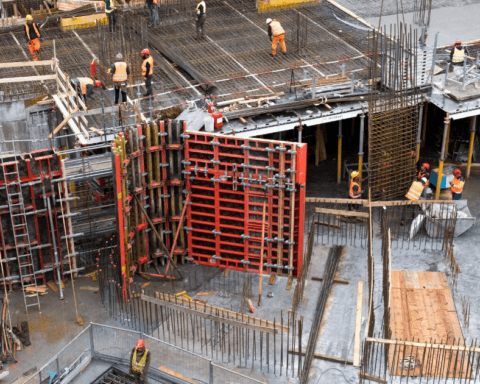
Where Red Bird Mall once stood, boarded up and half-empty, a new stoplight now turns green on Camp Wisdom Road, guiding traffic toward a Starbucks drive-thru and construction cranes rising above the skyline.
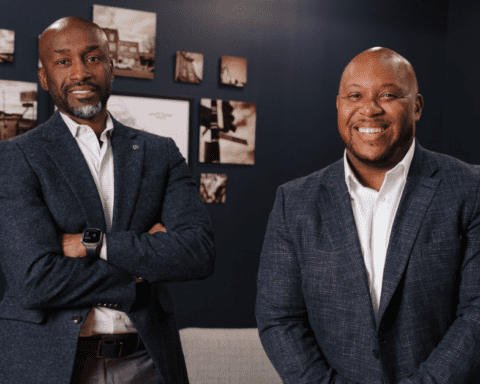
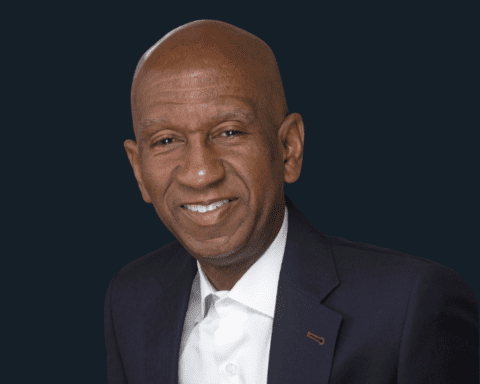
It’s the kind of scene southern Dallas hadn’t seen in decades. It’s also one of the clearest signs of what Terrence Maiden and his firm, Russell Glen, have helped create.
Across the United States, aging shopping malls and underused commercial corridors are being reimagined as places that bring together housing, healthcare, education, retail, workplaces, and public gathering spaces.
With existing infrastructure, central locations, and established transportation access, many of these properties are becoming the foundation for a new generation of mixed-use development.
Founded in 2018, Dallas-based Russell Glen has emerged as a leading developer in that movement. The real estate investment and development firm specializes in transforming legacy commercial properties into integrated districts designed to support long-term economic activity while serving the evolving needs of surrounding neighborhoods.
From Oak Cliff to the C-Suite
Maiden’s path to real estate ran through football. A standout player at Texas Christian University alongside his identical twin brother, Tim, Maiden was introduced to commercial development by a TCU alumnus.
He spent the early years of his career leasing and developing projects across Texas, New Mexico, Louisiana, and North Dakota before leading real estate expansion initiatives for Panda Express and Panera. He later returned home to southern Dallas as an executive at Corinth Properties.
That homecoming shaped everything that followed.
Maiden founded Russell Glen, naming the company after the Oak Cliff street where he grew up, as the City of Dallas launched GrowSouth, an initiative focused on attracting investment to the city’s historically underserved southern sector.
The timing created an opportunity to partner with lead investor Peter Brodsky on what would become Russell Glen’s signature redevelopment.
The Shops at RedBird: A Case Study in Community-Led Redevelopment
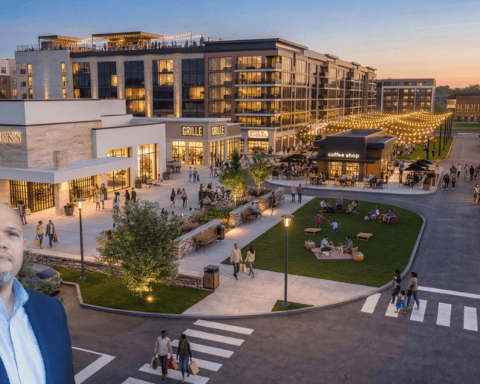
The transformation of the former Red Bird Mall into The Shops at RedBird has become Russell Glen’s most recognized project and one of the country’s most closely watched examples of adaptive reuse.
Before construction began, Maiden and Brodsky held roughly 50 meetings with residents, church groups, neighborhood organizations, and local stakeholders. The goal was straightforward: understand what the community wanted before determining what would ultimately be built.
The result is a roughly $200 million redevelopment that today brings together healthcare providers, financial institutions, restaurants, office tenants, retailers, educational organizations, and community services within a single destination.
The project’s continued expansion has attracted institutional investment, reflecting growing interest in developments that combine multiple uses while serving as long-term economic anchors for their surrounding neighborhoods.
Today, The Shops at RedBird is widely referenced as a case study in adaptive reuse, illustrating how legacy retail properties can be repositioned to meet changing market demands while supporting both commercial activity and community life.
Healthcare as Infrastructure
Healthcare has become an increasingly important component of large-scale redevelopment projects across the country.
Health systems are expanding beyond traditional hospital campuses into mixed-use developments that offer convenient access, established infrastructure, and proximity to where people live and work. Former shopping malls often provide the space and accessibility needed for outpatient care, specialty clinics, and other neighborhood-based health services while generating consistent daily activity throughout a development.
For Maiden, the COVID-19 pandemic reinforced the importance of designing communities around wellness. It prompted a broader view of development that includes access to healthcare, grocery stores offering healthy food options, walkable public spaces, and green areas that encourage everyday activity.
That philosophy is reflected throughout The Shops at RedBird, where healthcare functions as one part of a larger ecosystem alongside offices, retail, restaurants, and community organizations.
Rivulet: Building Dallas’ Next Growth Corridor
Russell Glen’s development pipeline extends beyond RedBird.
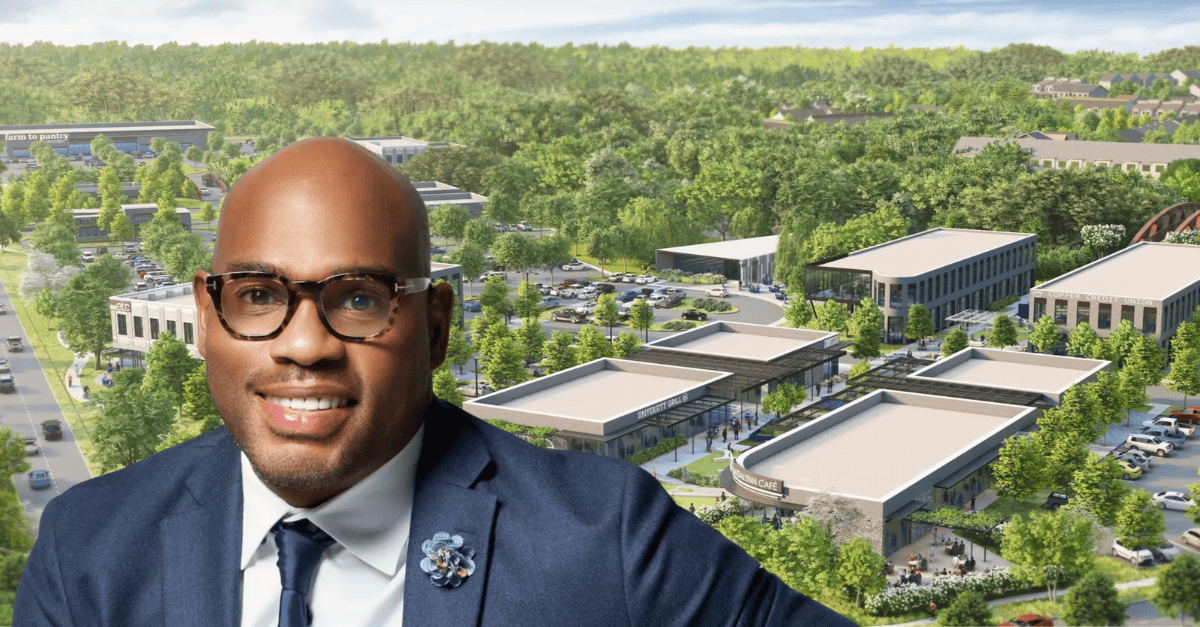
Rivulet, a planned 90-acre mixed-use community near the University of North Texas at Dallas, is expected to include more than 500 homes, grocery-anchored retail, office space, restaurants, parks, a public library and innovation center, and pedestrian-friendly public spaces.
Like RedBird, the project is being developed through collaboration among public agencies, institutional investors, and private stakeholders, reflecting Russell Glen’s emphasis on partnerships when delivering large-scale redevelopment projects.
Taking the Model Beyond Dallas
Russell Glen’s redevelopment strategy now extends beyond North Texas.
The firm was selected to lead the redevelopment of West Ridge Mall in Topeka, Kansas, applying many of the principles demonstrated at RedBird to another aging commercial property.
Additional projects, including Pasadena Square and Lake District West, continue that same approach, integrating commercial activity with neighborhood-serving amenities and institutional partnerships.
Together, these developments illustrate a consistent philosophy centered on adaptive reuse, collaborative planning, and creating places that continue serving their communities as needs evolve.
Leadership Beyond Development
Beyond Russell Glen, Maiden remains active in organizations focused on commercial real estate, healthcare, education, and community development.
Those leadership roles reflect the collaborative approach that has become central to the firm’s work, bringing together public agencies, institutional partners, investors, and local stakeholders to shape complex redevelopment projects.
What Comes Next
Commercial real estate is in the middle of a long reassessment of what aging retail property can become.
Malls that once existed primarily for shopping are increasingly being reimagined as places that include healthcare, housing, education, workplaces, civic institutions, and public gathering spaces within a single district.
With The Shops at RedBird continuing to evolve, Rivulet moving through development, and projects expanding beyond Dallas, Russell Glen has established a redevelopment model centered on adaptive reuse, institutional partnerships, and community-informed planning.
As more cities rethink how legacy commercial properties can serve future generations, that model is likely to become increasingly relevant.