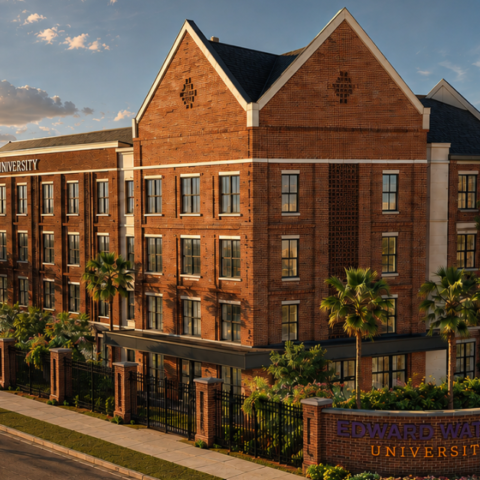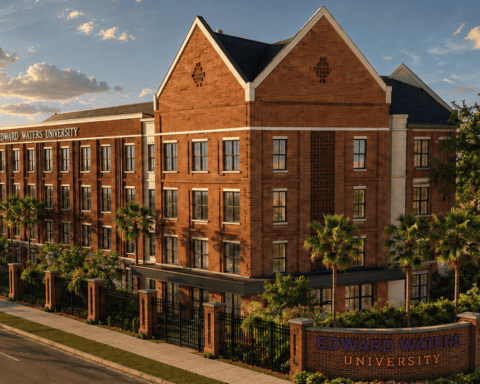
SoLa Impact built its business on private investment and Opportunity Zone capital.
For Broadway & Imperial, a 166-unit development in South Los Angeles, the firm is turning to federal housing tax credits and bond financing.
SoLa recently secured a $92.9 million financing package for the project, planned at Broadway and Imperial Highway. The package includes a $43.8 million construction loan, $18.1 million in federal Low-Income Housing Tax Credit (LIHTC) equity and a $31 million Fannie Mae permanent loan. KeyBanc Capital Markets also underwrote a $31 million public bond issuance as part of the broader transaction.
Inside the $92.9 Million Financing
Broadway & Imperial will include 164 income-restricted apartments and two manager units, serving households earning between 30% and 70% of area median income.
KeyBank Community Development Lending and Investment is providing the construction loan and the LIHTC equity investment. Key Commercial Mortgage Group arranged the permanent loan through Fannie Mae’s Multifamily Tax-Exempt Bond (MTEB) program.
The $92.9 million is the sum of those three KeyBank components, and they work at different stages of the project. The construction loan funds development, while permanent financing typically replaces construction debt once a property is completed and meets required operating benchmarks. The total therefore describes financing across the life of the deal rather than cash available at one time.
KeyBanc Capital Markets also underwrote a $31 million public bond issuance as part of the broader financing structure. That issuance is reported separately from the $92.9 million KeyBank financing package and should not be added to the headline amount without a complete breakdown of the project’s sources and uses.
The LIHTC equity is the piece that sets this deal apart. Investors contribute capital to qualifying developments in exchange for federal tax credits and related tax benefits. Unlike a mortgage, that equity does not need to be repaid from the property’s rental income.
That matters in affordable housing, where rent restrictions cap revenue and, with it, the amount of conventional debt a building can support.
Broadway & Imperial uses the 4% version of the credit, which is typically paired with tax-exempt bond financing. The combination of the 4% LIHTC program and an MTEB permanent loan reflects the layered structures commonly used in bond-financed affordable housing.
A Developer Built on Private Capital
SoLa began by acquiring and rehabilitating naturally occurring affordable housing, then moved into ground-up construction in 2019. The company says it has raised nearly $500 million in equity from individuals and institutions to acquire, build, own and operate more than 2,000 apartments, with roughly 2,000 more in its pipeline.
Its Black Impact Fund, which attracts Opportunity Zone and traditional investment capital for projects in Black and brown communities, has drawn institutional investors including PayPal and the California State Teachers’ Retirement System, which committed $50 million through Belay Investment Group.
A Record of Layered Deals
SoLa has assembled complex capital stacks before.
Crenshaw Lofts, its 195-unit mixed-use development on the Crenshaw Corridor, combined Opportunity Zone equity, conventional bank financing, PACE financing and a $29 million New Markets Tax Credit allocation tied to its commercial and community components.
Broadway & Imperial uses a different mix: LIHTC equity, construction lending, bond financing and Fannie Mae permanent debt.
The pace of delivery shows how much capacity the firm has built. SoLa completed the 100-unit 117th & Compton in January 2025 and the 84-unit Crenshaw & 52nd the following month. Crenshaw Lofts arrived in February 2026.
In June 2026, it finished the 66-unit Broadway & 62nd using modular construction. The company says the project took less than 12 months, with its 70 modules installed over ten working days.
Why Tax Credits Are Entering the Mix
SoLa founder Martin Muoto has tied the move to the economics of affordable housing.
In an October 2026 LinkedIn post about the company’s financing strategy, Muoto wrote that “private capital and conventional commercial debt simply can’t make many projects pencil.”
For a developer with established access to private and institutional investors, the choice stands out. It brings more parties into each deal, including tax-credit investors, bond-market participants and an agency lender, while adding a source of equity that does not depend on rental income for repayment.
The $92.9 million package expands SoLa’s financing strategy rather than replacing it.
With roughly 2,000 units in its pipeline, the firm now has a wider set of tools to finance them.