Before Tulones became a multimillion-dollar clothing brand, brothers Dameon “Dollas” and Chris “Benji” sold clothes out of cars and a Sprinter van.
They traveled across the South, reaching customers at college campuses, barbershops, and other gathering places.
By 2021, their company, Tulones Currency Collectors, had reportedly generated $17 million in annual revenue.
Founded in 2017 by the brothers from Mobile, Alabama, Tulones has developed an extensive product catalog, custom manufacturing relationships, and a direct-to-consumer operation.
Its growth has been driven by grassroots marketing, advance inventory planning, and a distinctive Southern identity.
Where Did Tulones Start?
Before relocating to Atlanta, the brothers had already begun experimenting with apparel while in high school, creating an earlier clothing label called Fly Hearts Never Broken.
Those experiences helped them understand the importance of developing a recognizable brand.
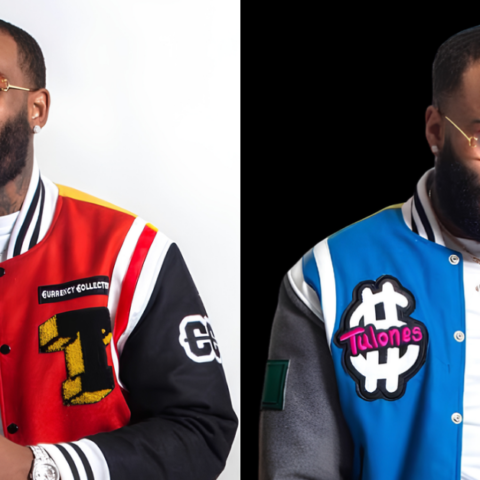
The name Tulones comes from the two lines in a dollar sign. Currency imagery appears throughout the company’s designs, extending to the founders’ nicknames and product graphics.
The brothers wanted to create clothing that reflected Southern fashion culture, drawing on styles worn across cities from Texas to Florida.
“We make things for OUR people,” Dollas explained in a Social Proof article about the company.
The founders initially launched with approximately nine products, producing about 100 units of each. They replenished inventory as merchandise sold and reinvested revenue into additional products.
Rather than waiting for customers to discover the brand online, they traveled with their clothing and sold directly to buyers.
The Sprinter van eventually became a mobile retail operation, allowing them to carry more merchandise and reach different markets.
In a December 2020 interview with The Progress Report, the brothers described earning $10,000 in profit during one weekend, an experience that helped motivate their move to Atlanta.
They also discussed gaining visibility through music artists, including Young Thug, who they said wore Tulones clothing during a Prada fashion show.
How Did Tulones Reach $17 Million in Revenue?
Tulones expanded its online business in 2018, the same year it reached $1 million in sales.
Revenue increased to $8 million in 2019 and $17 million in 2021, according to the November 2022 Social Proof Podcast episode featuring the founders.
During the pandemic, Tulones had merchandise available for purchase and an operation capable of shipping orders as online demand increased.
The business eventually moved from its early basement operation into a 12,000-square-foot warehouse, supporting a larger inventory and fulfillment operation.
What Is Tulones’ Overflow Strategy?
A defining feature of the Tulones business model is what the founders call their overflow strategy.
The objective is to maintain consistent daily sales rather than depend entirely on products selling out immediately.
The brothers described keeping staple items available while introducing new collections. Their planning extends months ahead, with some core products intended to remain in stock for roughly six months.
This gives customers opportunities to purchase familiar products while discovering new designs during regular releases.
The approach requires the founders to determine which products to replenish, how much inventory to order, and when new collections should enter production.
Their thinking was influenced by studying larger apparel companies.
In a September 2022 Revolt interview recap, Dollas discussed examining how Nike manages its employees and production schedules, along with Louis Vuitton’s practice of developing collections well in advance.
He emphasized that growing a company requires improving its organizational structure, even when sales are strong.
That philosophy also shapes how the brothers work together. They maintain professional expectations and accountability despite being family.
How Tulones Develops Its Own Products
The brothers have invested in custom manufacturing to create garments with distinctive materials, construction, and design details.
Their product development process includes decisions about fabric weight, stitching, fit, colors, and technical specifications.
In the Social Proof interview, the founders discussed the cost of producing custom products, including a mold priced at approximately $6,500 and manufacturing invoices reaching $400,000.
Those expenditures illustrate the capital required to develop proprietary designs and order merchandise at scale.
The founders also emphasized the difference between designing clothing and applying a logo to existing garments.
Their approach includes developing coordinated outfits, denim, outerwear, and accessories that share recognizable design elements.
Details such as custom seams, garment cuffs, and fabric composition are part of that process.
Tulones’ manufacturing investments support an expanding assortment that gives customers multiple ways to wear the brand.
Why Does Tulones Produce Basketballs and Toothbrushes?
Tulones has extended its branding into products beyond apparel, including basketballs, toothbrushes, bicycles, socks, and underwear.
The strategy is rooted in making the company familiar to customers in everyday settings.
During its early direct-sales period, Tulones included complimentary socks and underwear with clothing purchases.
The founders explained that these products helped put the brand inside customers’ homes, increasing the likelihood that other people would encounter its name.
The same thinking informed the development of branded basketballs and toothbrushes.
A basketball could introduce Tulones to people at a neighborhood court. A toothbrush given to a houseguest could carry the brand into another household.
The brothers have also used bicycles for Christmas and back-to-school giveaways, combining community engagement with additional brand visibility.
These products extend the company’s identity into activities and spaces where customers spend time.
From the South to the World
Tulones continues to develop coordinated clothing collections, seasonal designs, and accessories through its online storefront.
Its recurring Tuesday drops introduce new products while staple merchandise remains part of its broader assortment.
The brothers’ early approach to selling clothes directly to customers established relationships that helped the brand grow. As sales increased, they invested in inventory, manufacturing, and fulfillment systems to support a larger operation.
What began with merchandise carried in cars and a Sprinter van has developed into a clothing company with an extensive product catalog and customers beyond its original Southern markets.
The company’s slogan captures that ambition: “From the South to the World.”
Shoppe Black is building a curated directory of Black-owned businesses. If you’d like your company considered for inclusion, submit your information here.