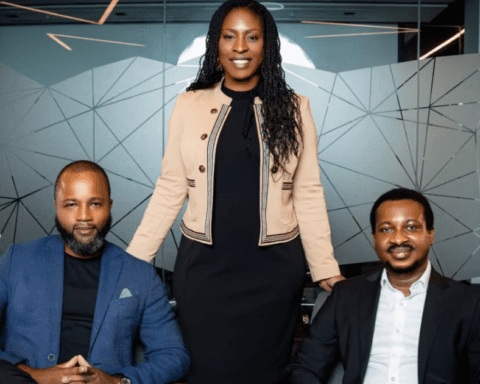
Venture capital in Canada has a short list of institutional firsts. Lise Birikundavyi holds one of them.
As Managing Partner at BKR Capital, a Toronto-based fund that closed over $22 million after being oversubscribed from its original $10 million target, she leads the first Black-led venture capital fund in Canada managing institutional capital. Her co-founder is Isaac Olowolafe Jr.
The fund’s thesis is direct: invest in Black-led tech companies. That focus is not a constraint on returns. It reflects a structural read on where the market has systematically underallocated.
From Hedge Funds to Impact Capital to West Africa
Birikundavyi’s path to venture wasn’t linear, but the logic connecting each stage is consistent. She began her career in the hedge fund space, where she was introduced to impact investing — the idea that capital could address social problems while generating returns. That framing became the foundation for everything that followed.
She left her hedge fund role, moved to China to study Mandarin and understand the China-Africa economic relationship, and set her sights on becoming an investor focused on the African continent. Her reasoning was systemic: build strong private sectors in Black-led countries, and you change the conditions that produce inequality everywhere.
From there she worked in Ghana and then Cote d’Ivoire, deploying capital in education technology for a Swiss foundation and doing direct investment in tech on the continent. What she encountered repeatedly was a gap between the talent on the ground and what the investment community was willing to fund. Foreign capital flowed toward founders from abroad, frequently bypassing local operators who had stronger market knowledge and fewer resources.
She also observed a parallel dynamic: significant pools of capital held by people within those markets, but invested outside them or concentrated in real estate rather than deployed into early-stage companies. The supply-and-demand problem in Black entrepreneurship, she concluded, runs in both directions.
The Return to Canada and the Launch of BKR
In late 2019, Birikundavyi returned to Canada. Her second son was born in early 2020, weeks before COVID ended international travel. Around the same time, the murder of George Floyd accelerated a broader reckoning about where institutional capital was and wasn’t going.
She and Colorado saw a clear gap: Canadian Black entrepreneurship was producing real companies, but institutional capital wasn’t treating it as an investable category. They built the vehicle to change that.
BKR Capital targets the tech sector and is sector-agnostic within it, though the team carries particular depth in proptech, edtech, and fintech given their backgrounds. The fund is 90 percent deployed in Canada, with 10 percent reserved for opportunistic investments outside the country.
What the Canadian Market Actually Looks Like
A common assumption is that Canadian and U.S. venture markets behave similarly. Birikundavyi draws a meaningful distinction. The demographic base of Black entrepreneurship in Canada is largely first and second-generation immigrants, founders building products for the Canadian market but often with a line of sight toward their countries of origin, whether in the Caribbean, Africa, or elsewhere. That dual-market orientation, she argues, tends to produce more innovative and inclusive products than the domestic-only lens typically rewards.
The friction she encounters most often is market size. Canadian founders frequently orient toward U.S. expansion early because the U.S. market is roughly ten times larger. BKR’s work often involves keeping companies grounded in Canada long enough to build genuine traction before they look south.
Valuations in Canada were also inflated during the peak funding environment, in part because U.S. investors entering Canadian deals repriced expectations upward. As conditions normalized, BKR’s position strengthened. The fund has always evaluated fundamentals over momentum, which Birikundavyi ties directly to the nature of the founders they back. Black founders have historically had to build with less and make capital work harder. That operational discipline becomes a structural advantage when market conditions tighten and investors stop funding companies without real traction.
How BKR Evaluates Deals
The fund’s investment bar requires a credible path to $100 million in revenue. The secondary question is equally important: can BKR actually help a company get there? They pass on deals where the domain is outside their operating knowledge, regardless of how strong the team looks on paper. The value-add question carries as much weight as the market opportunity.
The fund’s thesis also functions as a filter. BKR invests in Black-led tech companies. When founders outside that definition come in for meetings, the conversation doesn’t extend. The thesis is institutional. It isn’t negotiated deal by deal.
What Founders Get Wrong When Raising
When asked what she would prioritize if she were on the founder side of the table, Birikundavyi starts with fundamentals: revenue trajectory, margin improvement, hiring discipline, customer acquisition clarity, and whether product decisions are being driven by real customer feedback or internal assumptions. Founders raising to survive rather than to scale have a positioning problem that no valuation adjustment fixes.
The second issue is targeting. Institutional funds have these, and founders who pitch outside those theses waste time regardless of deck quality. She recommends mapping each target investor’s thesis, stage preference, and risk tolerance before building an outreach list. First-check investors operate differently from follow-on investors. The research required isn’t complicated, but a significant share of founders skip it.
She adds one nuance: volume of pitches builds real skill, but only when expectations are calibrated correctly going in. Pitching the wrong investor repeatedly has limited learning value once the pattern is clear.
The Larger Argument BKR Is Making
What BKR represents, structurally, is a proof of concept for a category of institutional capital that much of the venture ecosystem has historically treated as philanthropic rather than commercial.
The fund being oversubscribed and the portfolio being built on economic fundamentals advance that argument.
The gap Birikundavyi observed in West Africa, capital allocated by people who didn’t understand the market, flowing past people who did, has a direct domestic equivalent.
BKR is built on the premise that closing that gap produces returns.
Watch the full conversation with Lise Birikundavyi below.