The International Space Station is a functioning laboratory operating 250 miles above Earth, managed through a multinational framework involving NASA, Roscosmos, ESA, JAXA, and the Canadian Space Agency.
Getting there requires years of technical credentialing, institutional selection, and demonstrated performance across some of the most demanding professional environments on the planet.
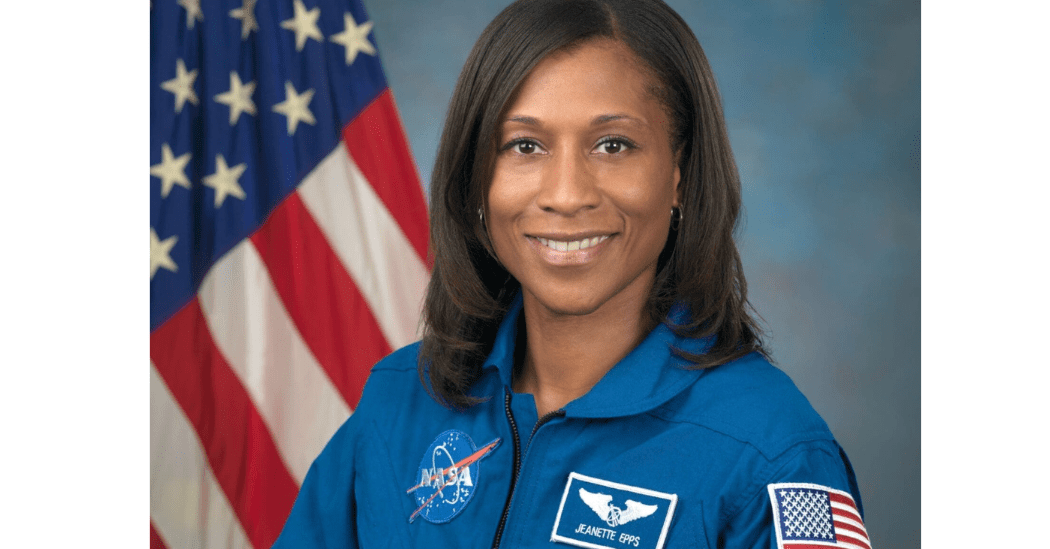
In January 2018, NASA assigned aerospace engineer and astronaut Dr. Jeanette Epps to Expedition 56, making her the first Black astronaut selected to serve as a crew member aboard the ISS.
Her trajectory to that assignment reflects a specific kind of professional architecture, built through academic depth, applied research, and institutional access.
Epps completed her undergraduate degree in physics at LeMoyne College in Syracuse, New York in 1992, followed by a master’s degree in aerospace engineering from the University of Maryland in 1994 and a doctorate from the same institution in 2000.
Her research at Ford Motor Company produced patented work in frontal collision systems, placing her at the intersection of aerospace physics and applied automotive engineering. She then spent seven years at the Central Intelligence Agency as a Technical Intelligence Officer before NASA selected her for astronaut training.
That sequence matters structurally. The career path from academic physics to applied patents to federal intelligence work to spaceflight reflects the layered credentialing systems that govern access to the most resource-intensive scientific infrastructure in existence.
The ISS represents roughly $150 billion in cumulative investment. The professionals assigned to it are selected on demonstrated technical competence, institutional reliability, and the capacity to function in high-risk, resource-constrained environments. Epps met that standard across multiple sectors before she ever approached a launch pad.
Her involvement in science education, particularly working with young people across age groups, reflects a practical understanding of pipeline development.
The aerospace and engineering sectors face long-standing gaps in Black professional representation, gaps that begin at the point of early technical exposure and widen through each stage of the credentialing process.
Engagement at that level carries structural consequences for who enters those pipelines and who advances through them.
Dr. Epps earned a seat at one of the most operationally complex stations in human history through a credentialing record built over decades, across industries, and at the highest levels of federal and scientific infrastructure.