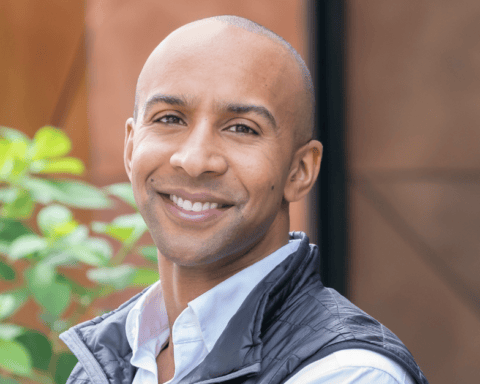
I first interviewed Apis & Heritage Capital Partners founders Todd Leverette and Philip Reeves in 2021.
At the time, their first fund had reached a $30 million first close. The firm was beginning to use private capital to help business owners sell their companies to their employees.
The founders said their ability to scale would depend largely on how much capital they could raise and how well they executed.
Five years later, that strategy has grown considerably. Legacy Fund I ultimately closed at $58 million, and A&H says Legacy Fund II has reached $250 million in assets under management.
The investment manager uses private credit to finance Employee-Led Buyouts, or ELBOs, which transition established businesses to 100% employee ownership through Employee Stock Ownership Plans, or ESOPs.
Private Credit Meets Business Succession
A&H’s growth comes as private credit takes a larger role in U.S. corporate finance and millions of business owners approach succession decisions.
U.S. private credit loans reached approximately $1.4 trillion in the second half of 2025, according to the Federal Reserve, representing about 10% of nonfinancial corporate debt. Banks’ share of corporate lending declined from 48% in 2015 to 29% in 2025.
McKinsey’s 2026 Great Ownership Transfer report estimates that six million U.S. small and medium-size businesses will face ownership transitions by 2035. Around one million could be viable candidates for sale, representing close to $5 trillion in business value.
A&H is using private credit to make employee ownership a potential destination for some of those businesses.
Leverette’s work on employee ownership preceded the firm. He previously led Legacy Business Initiatives at the Democracy at Work Institute, while Reeves brought experience in private equity and working with small businesses.
In their 2021 interview with Shoppe Black, the founders explained that their original plan was to finance a single employee ownership transaction. They eventually developed an investment fund capable of financing multiple acquisitions.
How an Employee-Led Buyout Works
Under an ELBO, A&H provides financing for the acquisition of a business, which is transitioned to an ESOP trust that owns the company on behalf of employees.
Workers do not personally finance the acquisition. Eligible employees receive shares through the ESOP over time, creating a retirement asset tied to the company’s value.
Reeves has compared the structure to a leveraged buyout, with a key difference in where the equity ultimately sits: an employee trust rather than a private equity fund.
The model addresses a problem the founders identified early.
In 2021, Reeves told Shoppe Black that owners interested in employee ownership could face years of seller financing after a conventional ESOP sale. A&H was designed to provide acquisition capital and reduce that burden.
A&H and ESOP adviser SES ESOP Strategies say the ELBO structure can allow sellers to receive approximately 90% of enterprise value at closing.
From Two Companies to a Portfolio Employing More Than 1,600 Workers
When Shoppe Black first covered A&H, the firm was completing its first two employee ownership transactions.
Today, its portfolio includes six companies spanning construction, infrastructure, landscaping, agriculture and commercial cleaning.
A 2026 Rutgers case study reports that those six companies employ more than 1,600 workers. The portfolio includes Apex Underground, Accent Landscape, Blooming Nursery, Sky Blue Builders, Consolidated Construction Services and B&B Maintenance Services.
The CCS transaction illustrates the succession model.
The Maryland underground utility contractor had been owned by founders Steve James and Cathy Kozoidek-James for nearly four decades before A&H financed its transition to 100% employee ownership.
“We determined we did not want to hand off this great business to some private group or competitor who would change the culture of what we have created over the years,” James said when the transaction was announced.
A&H’s largest workforce conversion came through B&B Maintenance, a commercial cleaning company with more than 1,100 full- and part-time employees.
A Growing Employee Ownership Investment Market
A&H is part of a relatively small group of investment firms financing ESOP transactions.
The National Center for Employee Ownership has identified Mosaic Capital Partners, Long Point Capital, American Working Capital, Menke and A&H among firms with a particular focus on ESOP transactions.
Mosaic provides one close comparison, financing lower-middle-market companies transitioning to employee ownership.
A&H targets profitable businesses with large hourly workforces in essential industries, with an emphasis on companies employing low- and moderate-income workers and workers of color. Legacy Fund II seeks competitive private-credit returns while financing transitions to 100% employee ownership.
The broader alternative-ownership capital market is also expanding. Transform Finance reported in July 2026 that its database includes nearly 100 funds and financing vehicles, with employee ownership representing its most active category.
Scaling the Capital Behind the Model
The difference between A&H in 2021 and today is clearest in its capital base.
Legacy Fund I went from the $30 million first close reported by Shoppe Black to a $58 million final close.
Legacy Fund II reached $85 million in commitments at its first close in June 2025, already exceeding the size of Fund I. A&H has since reported that the fund reached $250 million in AUM.
The firm has also partnered with Calvert Impact on a senior-debt facility of up to $50 million designed to support the senior credit portions of future ELBO transactions.
The additional capital allows A&H to pursue the goal Reeves and Leverette described to Shoppe Black five years ago: transitioning more and larger companies to employee ownership.
The question now is how much wealth those transitions ultimately create for workers.
As trillions of dollars in privately held businesses approach ownership transitions, A&H is testing whether private credit can make employee ownership a more viable option for who owns those companies next.
Shoppe Black is building a curated index of Black-owned businesses. If you’d like your company considered for inclusion, submit an inquiry here.