Ghana’s Kente cloth has long carried cultural value around the world. Now the country is taking steps to ensure that more of the economic value attached to that reputation remains connected to the communities and artisans that produce it.
Kente became Ghana’s first product protected as a Geographical Indication (GI) on August 8, 2025. The designation was officially launched on September 30 through an initiative involving Ghana’s Registrar General’s Department and the World Intellectual Property Organization (WIPO).
The protection creates a formal connection between authentic Kente and the places, production methods, and communities responsible for the textile.
For Ghana, the designation represents more than recognition of one of its best-known cultural exports. It creates an intellectual-property framework that could help distinguish authentic Kente in global markets, strengthen the competitiveness of local producers, and give weaving communities a greater opportunity to capture the commercial value of their craft.
A Cultural Tradition With Economic Value
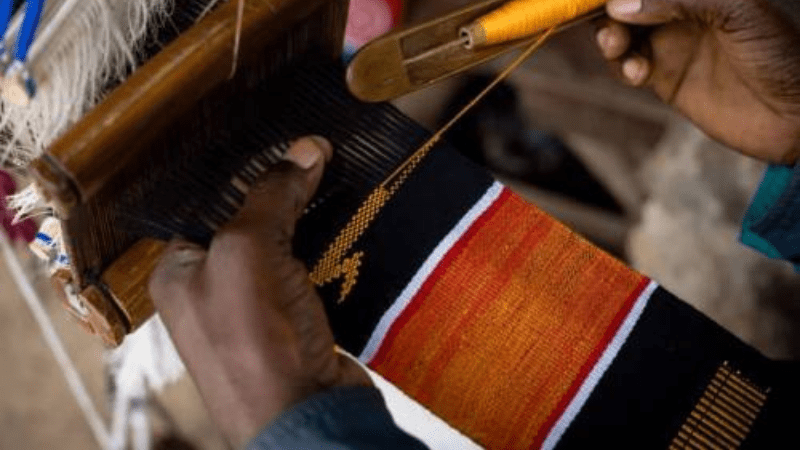
Kente is a handwoven textile traditionally produced in communities across Ghana’s Ashanti and Volta regions.
Its patterns, colors, and designs carry meanings tied to proverbs, history, social values, status, and identity. Ghana’s national register of intangible cultural heritage identifies weaving communities including Bonwire, Adanwomase, Ntonso, Agotime, Tafi, and Agbozume as custodians of the traditional craftsmanship.
Once closely associated with royalty and ceremonial occasions, Kente has become an internationally recognizable expression of Ghanaian and African identity. It is worn at graduations and celebrations across the African diaspora and has influenced fashion well beyond Ghana.
In 2024, UNESCO added the craftsmanship of traditional Kente cloth to its Representative List of the Intangible Cultural Heritage of Humanity.
Its global visibility, however, creates an economic question: Who captures the value created by that recognition?
A textile can become internationally famous while the artisans and communities responsible for it capture only a fraction of the resulting commercial activity.
What Geographical Indication Protection Does
A geographical indication is a form of intellectual-property protection used for products whose reputation, characteristics, or qualities are associated with a particular place.
Champagne, Darjeeling tea, Tequila, and Roquefort cheese are among the best-known examples.
For Kente, the framework is intended to help consumers distinguish textiles connected to recognized Ghanaian weaving traditions from products that use the Kente name without meeting the applicable origin and production standards.
WIPO’s work with Ghana on the Kente project specifically identified several objectives: improving recognition of the quality of Ghanaian Kente in domestic and international markets, strengthening producers’ competitiveness, developing branding around the product, safeguarding local livelihoods, and preventing infringement of producers’ rights.
That distinction can become economically significant.
When consumers cannot easily determine whether a heritage product is authentic, mass-produced imitations can compete primarily on price. Certification, labeling, traceability, and enforceable standards can give genuine producers another basis for competing: origin, craftsmanship, reputation, and authenticity.
Can Protection Translate Into Higher Incomes?
GI status alone does not guarantee higher incomes for Kente weavers.
Turning legal protection into economic value requires an infrastructure around it.
Producers need clear standards governing which textiles qualify. Buyers need a reliable way to identify authentic products. Weaving communities and producer organizations need systems for certification and traceability. Ghana also needs the ability to promote the designation and enforce protections when the Kente name is misused.
Those issues are already part of the discussion surrounding the designation.
In June 2025, Charles Agbeve, Member of Parliament for Agortime-Ziope, called for proper labeling and traceability of Kente products so that weavers could benefit financially from their work.
More recent analysis in Ghana has similarly emphasized that GI protection needs to be accompanied by credible standards, coordination among producers and public institutions, traceability, branding, and access to premium markets if weaving communities are to capture greater value.
The distinction is important. Legal recognition creates an asset. The commercial systems built around that asset determine how much value reaches producers.
Protecting the Communities Behind the Cloth
The potential impact extends beyond individual weavers.
Kente production supports an ecosystem that can include yarn suppliers, dyers, traders, designers, retailers, tourism businesses, and other participants in Ghana’s creative economy. Ghana’s government has described indigenous textile production more broadly as a source of employment, small-business activity, tourism, and local wealth creation.
That makes the Kente designation an experiment worth watching.
If Ghana can connect intellectual-property protection with strong producer organizations, recognizable certification, international marketing, and effective enforcement, the global recognition Kente already enjoys could translate into greater economic value for the communities responsible for maintaining the tradition.
The designation also provides a model Ghana can potentially extend to other culturally significant products. The Registrar General’s Department says additional Ghanaian products are being considered for GI development and protection.
Kente has never lacked cultural recognition.
The next phase is determining whether Ghana can use that recognition to protect authenticity, preserve generations of craftsmanship, and ensure that the people producing one of the country’s most recognizable cultural exports participate more fully in its economic value.