The Obama Presidential Center is reshaping the capital environment on Chicago’s South Side.
Institutional attention has returned to a corridor that spent decades outside the investment radius of major development. Land values are moving. Developer interest is accelerating.
And the conditions that typically produce displacement, fast capital, shallow community ties, and misaligned incentives are present.
Woodlawn Central is being built into that environment.
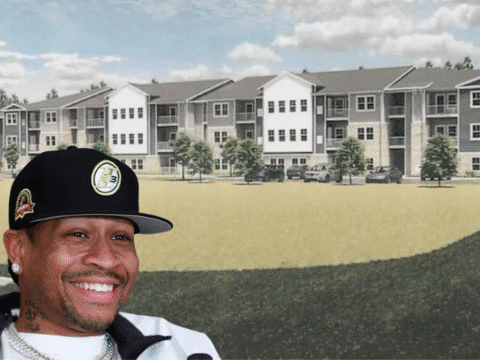
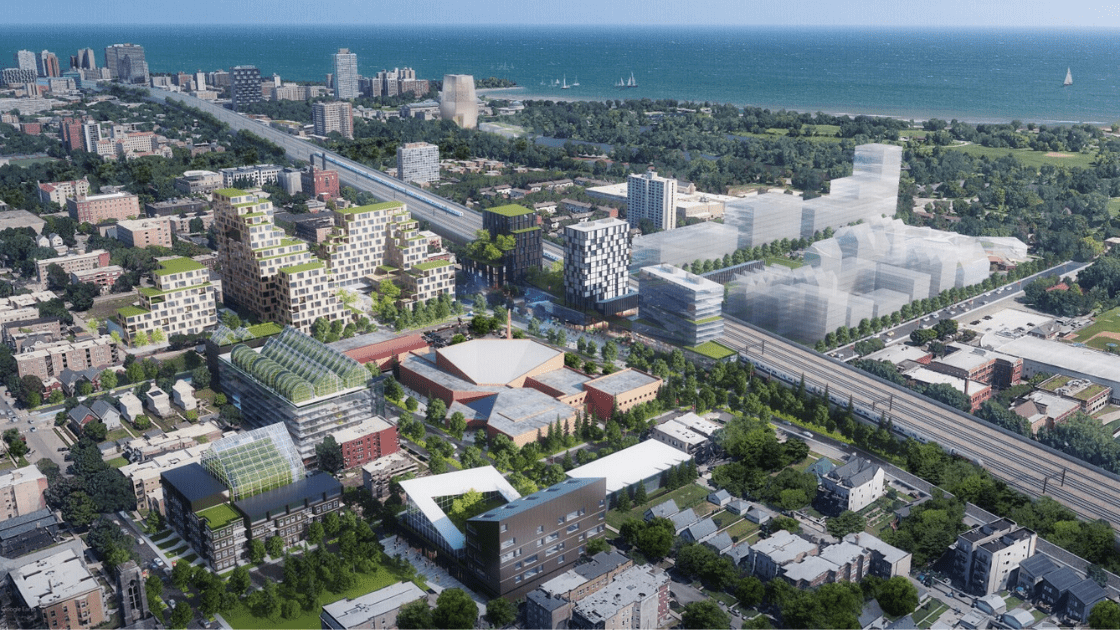
The project is an estimated $895 million mixed-use development in Chicago’s Woodlawn neighborhood, steps from the presidential center, Lake Michigan, and the University of Chicago.
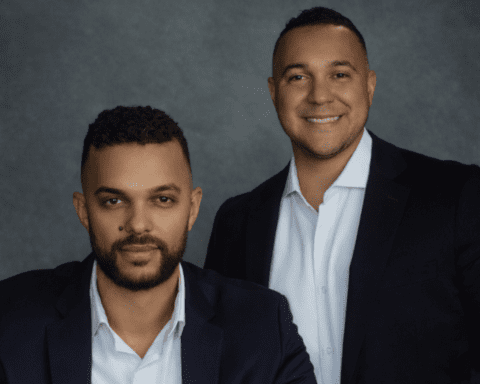
Built on the Apostolic Church of God’s 11-acre campus, the development brings together residential, retail, cultural space, and public realm improvements across multiple phases. Lead developer J. Byron Brazier is structuring it to last.
“The goal is durability of the ecosystem, not speed of deployment.”
That distinction is operational. It determines how the capital stack is assembled, how risk is distributed across phases, and how community alignment is embedded in the deal rather than managed around it.
Designing the Capital Stack by Purpose
Brazier’s approach to capital is not organized around sources. It is organized around function.
Anchor capital must be patient and mission-aligned. This includes institutional, foundation-backed, or strategic equity capable of holding through long development timelines without reacting to complexity or schedule shifts.
Public dollars and subsidies serve a different function. They de-risk infrastructure and catalytic components, not operating inefficiencies. Misapplied public capital is one of the fault lines where large urban projects begin to fracture.
Community alignment operates through the same logic. It is not a messaging exercise or a political requirement to be satisfied before the real work begins.
“Community alignment happens through ownership pathways, workforce integration, vendor inclusion, and long-term asset control, not just advisory boards.”
If it is not embedded in the deal structure, it does not hold through a ten-year development horizon.
Institutional conversations around the capital stack are progressing. Agreements are still being finalized, and partners cannot yet be publicly named.
What is consistent is the layered approach: institutional investment, public-private participation, and partners aligned around long-term district development rather than a single asset exit.
Managing Risk Across a Multi-Phase Project
A development of this scale carries layered exposure across entitlement and political cycles, capital market timing between phases, construction cost volatility, lease-up assumptions in transitional markets, and institutional partner fatigue across extended timelines.
The structural response to that layered risk is phase independence. Each phase of Woodlawn Central is designed to stand on its own financially and operationally while reinforcing the broader district strategy.
The build anticipates friction rather than assuming ideal conditions. If one phase encounters delays, political, financial, or market-driven, the project does not collapse inward.
Groundbreaking is targeted for later this year, pending final capital stack alignment and approvals.
Brazier returns often to a risk that resists clean quantification.
“If the public story fractures, capital confidence follows.”
Narrative risk in a neighborhood like Woodlawn surfaces before construction begins. Development conversations in communities with deep histories of disinvestment can shift quickly toward displacement concerns.
When that happens, the responsible move is transparency about what the project actually delivers and to whom. Trust, once lost in a corridor, is difficult to recover at any subsequent phase.
Where Public-Private Partnerships Break Down
Public-private partnerships are structurally necessary at this scale. They are also where pressure concentrates.
Misaligned timelines between political cycles and investment horizons create compounding tension. Undefined governance authority slows decisions at the wrong moments. Leadership transitions reshape negotiated expectations midstream.
Overpromising community impact without operational discipline erodes credibility across all parties.
Woodlawn Central’s governance structure addresses this through intentional separation. The Apostolic Church of God anchors the community engagement and mission alignment side of the venture, while the development entity remains focused on execution and delivery.
A faith institution with decades of established presence in Woodlawn holding that role is a structural commitment to who stewards the corridor long term. Each component operates within its lane while remaining aligned around the broader development vision.
Mitigation comes down to specificity.
“Clear development controls, milestone-based capital deployment, and defined performance metrics tied to measurable outcomes.”
Execution sustains alignment. Alignment does not sustain execution.
Structuring Returns That Hold
The assumption that community benefit and investor return exist in opposition is a framework problem.
“Strong communities stabilize assets. Stability protects yield. Workforce pipelines protect tenant occupancy. Integrated infrastructure reduces volatility.”
Equitable growth, built into the project structure, protects the asset. Return in Brazier’s framework is layered across financial, institutional, and reputational dimensions.
That framing is how the opportunity is presented to capital partners. Community durability and asset performance move in the same direction within the structure.
What the Current Financing Environment Requires
Higher debt costs, stricter underwriting standards, and reduced tolerance for speculative absorption have tightened the development financing environment. Capital is concentrating around operators with demonstrated governance capacity and defined risk containment.
“There is a gap between impact language and disciplined execution. Developers who close that gap secure capital.”
Access in the current climate is driven by credibility, governance structure, and the ability to demonstrate that a project can absorb pressure without fracturing. Woodlawn Central is being built to meet that standard.
Shoppe Black covers developers, firm owners, and operators building durable businesses and assets across industries. Founders and principals interested in editorial features can submit an inquiry here.