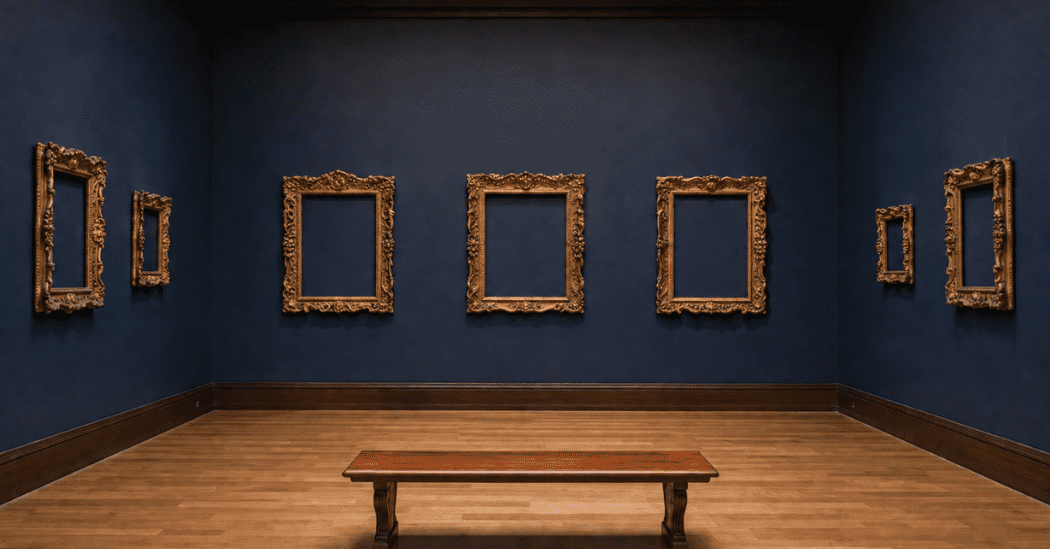
When a museum acquires an artist’s work, it creates a documented history of ownership, anchors long-term value, and opens access to the secondary market.
This group of Black-owned galleries has reached that level of influence.
They operate within a segment of the market where galleries are often the first to identify emerging artists, invest in their development, and build the foundation that leads to museum acquisition.
By the time museums and major auction houses engage, the artist has often moved to a larger, better-capitalized operation that receives the acquisition credit and the market benefit.
The galleries below have built programs strong enough to retain artists through placement and capture the long-term value that development creates.
Mariane Ibrahim Gallery | Chicago, Paris, Mexico City
Mariane Ibrahim founded her gallery in Seattle in 2012 with a focus on artists of the African diaspora.
The program’s expansion to Chicago, Paris, and Mexico City expanded access across three distinct collector and museum markets. Each location positions represented artists closer to the acquisition pipelines of major public collections in their respective regions.
In early 2026, a work by Sudanese artist Salah Elmur was acquired by the Baltimore Museum of Art. The gallery continues to add representation, with each new artist entering a program already connected to the institutional relationships that move work into permanent collections.
Gallery Guichard | Chicago
Andre and Frances Guichard built their Bronzeville gallery around art of the African diaspora and developed the institutional relationships to match. The Metropolitan Museum of Art has acquired work from Gallery Guichard.
The University of Chicago commissioned represented artist Shawn Warren to complete the first African American oil portrait in the university’s Law Library, a portrait of Earl B. Dickerson, the first African American to receive a law degree from that institution a century prior.
Both placements reflect deliberate relationship-building with acquisition decision-makers. The gallery retained the artists through the placement stage, which is where provenance and long-term market value attach.
Galerie Myrtis | Baltimore
Myrtis Bedolla founded Galerie Myrtis in Baltimore’s Bromo Arts District in 2008. The gallery has presented work by more than 500 artists and built a documented institutional placement record over that time.
The Museum of Fine Arts, Boston acquired a work by Delita Martin through the gallery. Represented artist Monica Ikeguwu holds work in the collections of the Baltimore Museum of Art, the Columbus Museum of Art, and the Muskegon Museum of Art.
Bedolla’s background as a practicing artist shapes a curatorial approach that builds bodies of work with institutional coherence, not just commercial appeal.
Richard Beavers Gallery | Brooklyn
Richard Beavers founded his Brooklyn gallery in 2007, focused on emerging and mid-career artists. The gallery placed represented artist Marcus Jansen into the Bronx Museum and the Rollins Museum of Art, among others.
Beavers has been direct about the structural dynamic: Black galleries identify and develop artists early, absorbing the investment risk, while larger operations with more institutional access step in later and broker the acquisitions.
His gallery has worked against that pattern by retaining artists through placement and advocating for gallery credit in acquisition records, making the development work visible in the market record.
Jenkins Johnson Gallery | San Francisco, Brooklyn
Karen Jenkins-Johnson founded her San Francisco gallery in 1996 and expanded to a Brooklyn project space in 2017.
The program represents artists across career stages, from 20th-century masters including Jae Jarrell, Wadsworth Jarrell, Mary Lovelace O’Neal, and Gordon Parks to established and emerging contemporary artists.
The placement record spans nearly three decades. Represented artists hold work in the collections of the Metropolitan Museum of Art, the Philadelphia Museum of Art, the Smithsonian Museum of American Art, the Library of Congress, and the Museum of Fine Arts, Boston.
N’Namdi Gallery | Detroit, Miami
George N’Namdi opened his first gallery in Detroit in 1981. The program now spans multiple cities and represents blue-chip African American artists, including Ed Clark, Frank Bowling, Al Loving, and Robert Colescott, a roster built over four decades of sustained artist relationships.
His son Jumaane extended the operation to Miami in 2012, adding a second major collector market.
The N’Namdi program is an example of what sustained infrastructure produces: a multigenerational operation with the artist relationships and market presence to place work into permanent collections without dependence on larger operations to broker the transaction.
The system these galleries are working against is not invisible. Black-owned galleries develop artists, absorb the early career risk, and build the bodies of work that institutions eventually want.
The galleries that capture the institutional transaction and the provenance credit and long-term value that come with it are often not the ones that did that work.
These five have closed that gap, in different cities, at different scales, with different rosters. The documentation of that matters, because institutional acquisition is a record of who built what.
Shoppe Black is building a curated index of Black-owned businesses across industries documented on this platform.
Inquiries can be submitted here.