When James H. Simmons III launched Asland Capital Partners in January 2020, the firm entered the market with two acquisitions already closed. A recapitalization anchored by StepStone Group Real Estate was in place at launch.
Simmons had spent more than a decade as a partner at Apollo Global Management Real Estate Advisors and later as Managing Partner of Real Estate at Ares Management. The firm entered with a defined investment thesis, an institutional capital partner, and a portfolio from day one.
That foundation shapes how Asland operates. The firm competes within the institutional real estate market.
The Investment Thesis
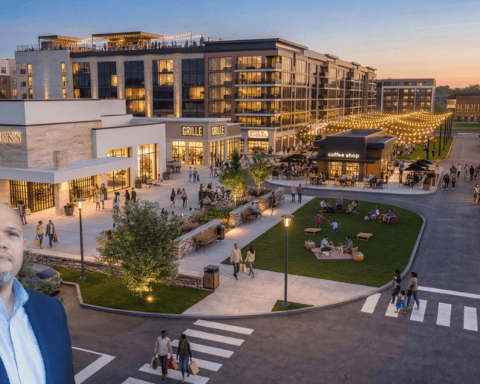
Asland focuses on acquiring, repositioning, and operating multifamily, mixed-use, and retail assets in revitalizing submarkets across the United States. The firm’s core conviction is a persistent shortage of high-quality housing affordable to middle-income renters.
The firm targets cash-flowing assets located below replacement cost. These assets are positioned in neighborhoods experiencing measurable demand growth. Workforce and affordable housing sit at the center of that mandate as the investment category itself, carrying return expectations consistent with institutional underwriting.
Asland controls more than 3,700 residential units and 800,000 square feet of commercial space across four markets.
The portfolio is concentrated in Upper Manhattan, the Bronx, and Washington D.C. The firm has deployed more than $425 million in equity across that portfolio.
Capital Structure and Institutional Relationships
The firm’s capital relationships reflect where it sits in the market. Asland’s partnership with Goldman Sachs Asset Management’s Urban Investment Group, which predates the firm’s founding, produced the Asland Sustainable Housing Fund, launched in 2023.
The fund targets affordable housing and mixed-income multifamily transactions. Its initial focus is the New York City metropolitan area, with a stated target of $250 million.
Its first acquisition was a five-property, 334-unit portfolio with retail space. The deal was structured around properties reaching the end of their 15-year Low Income Housing Tax Credit compliance period.
This type of transaction requires specialized underwriting across tax credit compliance and regulatory structures. It also reflects how Asland has expanded its capital stack approach in a higher rate environment. The firm is working more actively with private credit lenders, tax abatements, and tax-increment financing structures where conventional financing has tightened.
Recent Execution
Asland’s recent project activity illustrates the range of what the firm builds and manages. In the Bronx, a partnership with Pembroke Development produced Park Lane Senior Apartments at 1940 Turnbull Avenue in Soundview.
The project is a 115,000 square foot, 14-story structure with 154 units of fully affordable senior housing.
Thirty percent of those units are reserved for formerly homeless seniors. On-site social services are provided by a local nonprofit. The project is fully occupied.
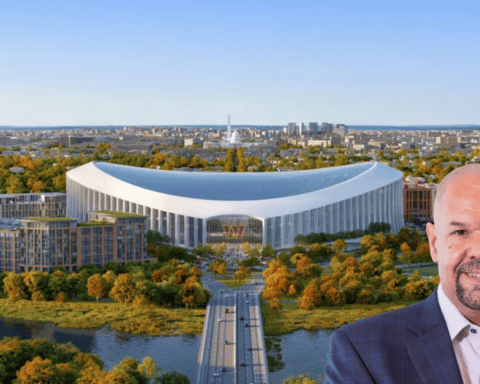
In Washington, D.C., Asland delivered the new headquarters for the District’s Department of General Services. The building is a 258,000 square foot, six-story office project located within the Northeast Heights development in Ward 7.
The project sits within a larger 1.5 million square foot mixed-use development. It required sustained coordination across city agencies, approvals, and community stakeholders over a multi-phase timeline.
Capital Has Tightened, But Deals Are Still Getting Done
The financing environment that shaped Asland’s recent strategy is the same one developers are navigating now. Senior debt has repriced. Construction lenders have tightened underwriting standards. Predevelopment timelines have extended as projects wait on equity commitments that previously closed faster.
Firms are working with private credit, tax increment structures, and agency financing layered alongside equity. Preferred equity and mezzanine capital are filling gaps that senior debt no longer covers.
Deals that once closed with simpler capital stacks are now being structured across multiple layers of debt and equity.
Asland operates at institutional scale within this environment.
Where Developers Are Still Raising Capital
The deals getting done in the current market are not limited to large transactions. Workforce housing, mixed-income multifamily, and urban infill development in the $2 million to $10 million equity range remain active.
Senior debt coverage has compressed. This creates consistent equity gaps in this range. Family offices, high-net-worth accredited investors, and private credit platforms are participating at check sizes aligned with these deals.
The capital raising process in this segment has fragmented. Institutional lenders are less accessible. Broker networks are thinner.
The gap between a credible deal and a closed raise is clear. It comes down to how the opportunity is structured. It also depends on how directly it reaches aligned capital.
That is where raises are slowing. Where they are still getting done, developers are aligning structure, timing, and investor access.
Current Capital Movement
Developers in this segment are structuring raises across multiple capital sources. Senior debt, preferred equity, and private investor participation are often combined within a single transaction.
The deals moving forward are the ones where capital is aligned early. They are structured clearly and placed in front of investors already positioned to deploy.